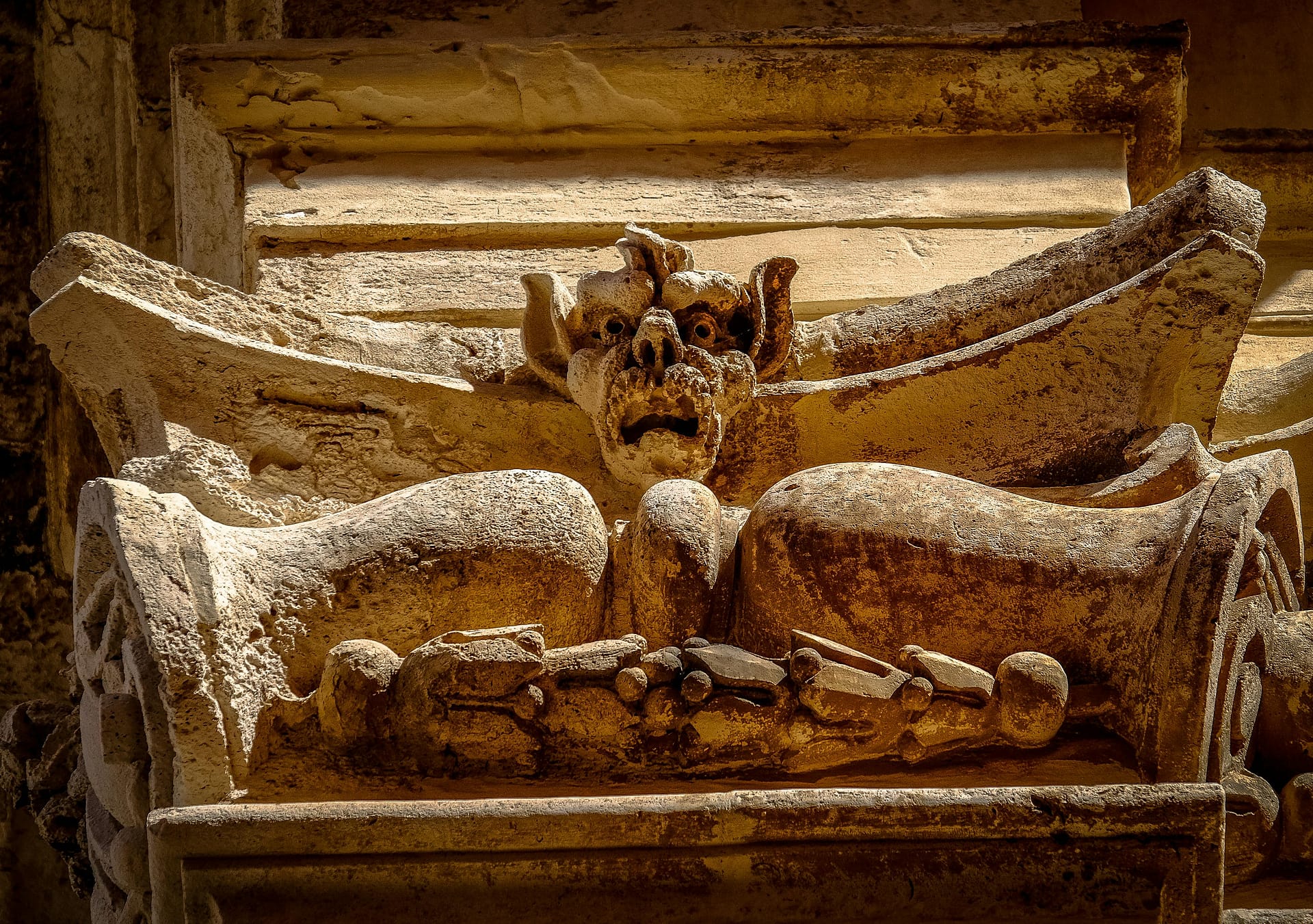
When I was a little kid, the personification of evil was the Wicked Witch of the West. The first time I watched The Wizard of Oz, she terrified me. The image dates back to the 15th century and the witchcraft trials that lasted for three hundred years. An ugly woman dressed in black, covered in warts, clutching a broomstick between her legs, from which it was rumored she obtained erotic pleasure. Witches were said to get their power by kissing Satan’s ass and had three teats for nursing demons.
It’s estimated that up to 100,000 people were executed over those three centuries, many of them midwives who practiced folk medicine or old women who lived alone and seemed creepy. Witch finders went from town to town, finding people to accuse. The Salem witch trials were one of the last and caused the deaths of 25 people.
It was a type of mass hysteria, promoted by the church, who declared folk healers and herbalists to be pagans in league with the devil. The real evil, of course, was what happened to the pagans accused of being witches, all of it perpetrated by Christians, both Protestant and Catholic. The churches, not peasant women, were the ones in league with Satan.
By devising an image of evil, Christian authorities eradicated what they viewed as a competing religion, and thereby became the thing they imagined. Evil is often not what it seems, but Satan doesn’t mind the misunderstanding.
In the Bible, Satan makes his entrance in the Book of Job, where he’s a member of God’s angelic council. God is pictured as a king convening his advisers, and Satan is one. The Hebrew word for Satan is saw-tawn, and refers to someone who is an adversary or accuser. As portrayed in Job, Satan is God’s district attorney, a prosecutor searching out the law-breakers and faithless, investigating people, so he can report back to God the judge.

In accomplishing this task, Satan is allowed to stress test people, to put them in difficult situations that reveal their faith and goodness, or lack thereof.
The results Satan gets on his tests have left him cynical. After all, to be fair, Satan is a constant witness to human failure. As the story goes, God asks Satan what he’s been doing. Satan says he’s been roaming around on the earth. “Have you run into Job?” God asks. “There is no one on earth like him.” According to God, Job never does anything wrong.
But that kind of praise annoys Satan. There’s no such thing as a human who’s never done anything wrong. In response to God’s naivete, Satan says that Job is only faithful because he’s never been tested. So God tells Satan to do his worst. The only thing he can’t do is kill him, since that would obviously defeat the purpose of the test.
It is a little disturbing that God authorizes all the catastrophes that happen to Job. By the time Satan is done, Job is bankrupt, his wife and kids die when their house collapses, and he gets covered in boils, which, if you’ve ever had a boil, you know what that means. Satan seems to enjoy his work. However, to his disappointment, Job gets an A+, and Satan presumably starts looking for someone else to prosecute. There’s no shortage of candidates.
In the story, Satan’s relationship to this world is clearly not one of friendship. If you’ve ever dealt with a prosecutor, it quickly becomes clear that prosecutors are not your friend. There’s a legitimate sense of danger. At the same time, being part of God’s angelic council, Satan is God’s servant. Judgment begins with examination. Grades require a test. Satan puts people in evil circumstances to see what they’ll do, but isn’t evil himself. He’s not a fan of humanity, but maintains a sense of professionalism.
At the time Job was written, there were no ideas about heavenly rewards. As recompence for the A+, Job’s former wealth is doubled and he gets new kids, only to lose it all again when he dies. God’s punishments and rewards occurred during his lifetime, not in an afterlife. Job isn’t compensated with eternal bliss, only temporal.
The time came, however, when those beliefs did not work anymore, because there was no justice in them. In death, righteous Job ended up in the same place as the idolatrous King Ahab and his wicked wife Jezebel. How is that fair? As a result, Jewish beliefs about an afterlife began to change, and those changes included the image and role of Satan.
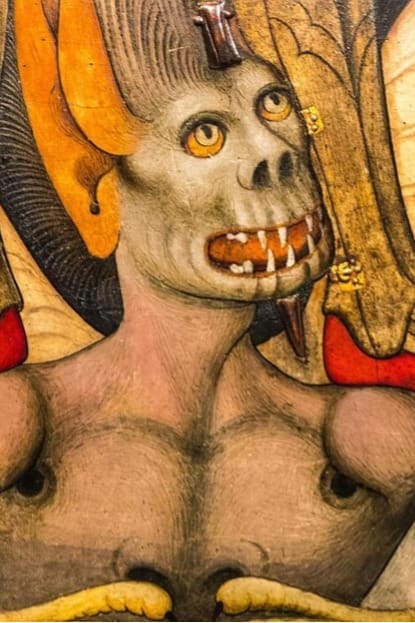
To a degree, this was due to the influence of Zoroastrianism, the religion of Persia that the Israelites encountered during their exile in Babylon. In Zoroastrian beliefs, evil is a spiritual force that exists apart from God, personified by a chief demon whose name is Ahriman. Their God, Ahura Mazda, and Ahriman are locked in conflict over control of the world. The source of this evil spiritual power is never really explained. The Zoroastrians believe that Ahriman simply was from the beginning.
Beginning with Judaism’s interlude in Babylon, the personification of evil found in Ahriman gradually became identified with Satan. By the time of Jesus, four hundred years later, most Jews believed Satan to be an opponent of God, a malevolent spiritual power combatting all that was good. Rather than being a prosecutor, Satan became an enemy. Rather than proctoring a test, Satan set people up to fail. The prior Satan’s job was to determine the truth about someone. Jesus calls Satan a liar and the father of lies.
Satan received a substantial makeover. God is truth and goodness; Satan contains none. God is love; Satan has none. God is the source of life; Satan possesses none. Satan is the personification of absence. The primary condition of Satan is emptiness. Evil exists without form.
You can see this in people whom evil affects. Continued misery and pain leaves people empty, as they give up hope. They become a shell of themselves. Emptiness is also the condition of those who inflict misery and pain. Satan is a serial killer’s empty eyes. It’s the look of both the torturer and the tortured. Satan, as a personification of evil, is a void, and hollowness is the eventual result of what evil leaves behind.
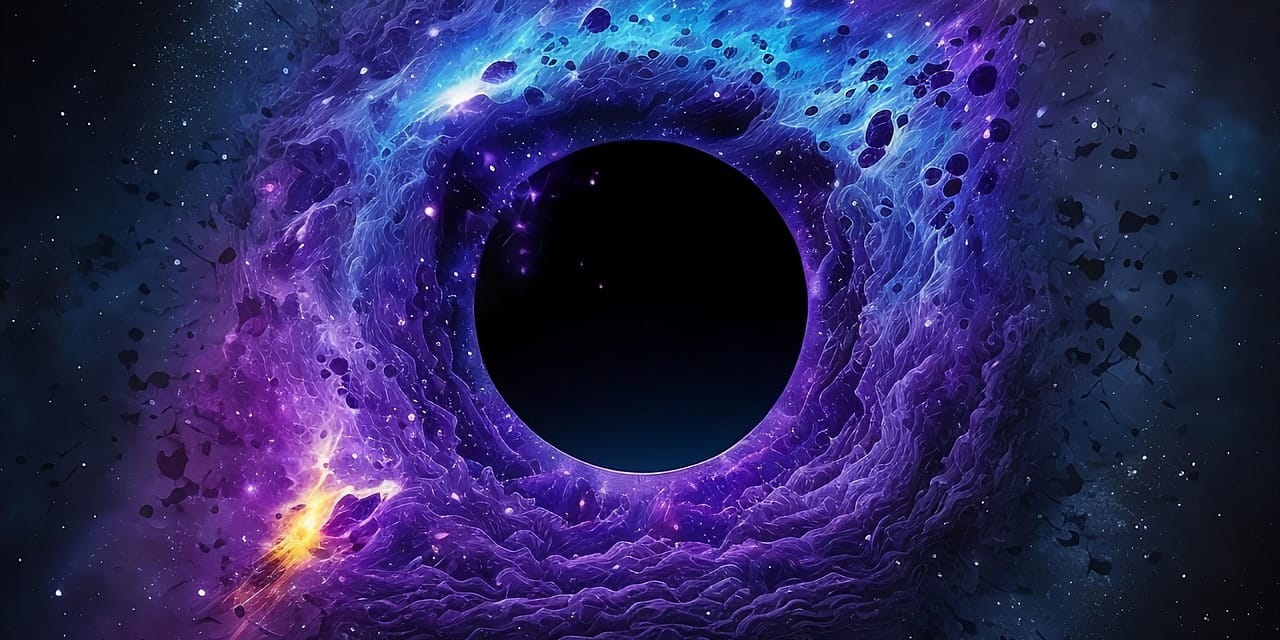
As the personification of emptiness and formlessness, Satan can only appear in the form of others. The evil choices we make are what give evil a presence in our world, and provide Satan with an imitation of life. Satan is the ever-changing face on a black hole, with a bottom no human can reach.
This Satan is the character Jesus rebukes in a confrontation with Peter. Offended when Jesus mentioned his impending death, Peter takes Jesus aside and scolds him for saying such a thing. “That will never happen to you!” Peter is thinking of Jesus as the commonly expected messiah, the popular version, who would lead his messianic army to victory over Rome. That victorious Messiah could not die, since death meant losing. Jesus seemed to be declaring defeat before the battle even started. Peter literally had his eyes on a throne, but, for Jesus, that throne was rooted in evil.
Peter’s admonition was a return to the first encounter between Jesus and Satan. In the Judean wilderness, we’re told, Satan tested Jesus with desires for worldly glory. “Jump from the temple wall. You won’t die.” Peter essentially told Jesus the same thing. But, as he did in the wilderness, Jesus puts Satan in his place, this time in the person of Peter. “Get behind me, Satan.”
The Satan whom Jesus rebukes has no appearance of its own. Satan isn’t an entity, since evil has no life is its own. Satan shows up in the people who let him; evil lives by proxy. At that moment, Peter was Satan.
This is why Jesus teaches that evil is the great deceiver, acting as what it is not, possessing no actual power, other than the power given by humans. Since we encounter evil through others, as well as ourselves, evil takes on a personal character. But Satan has no personality and can become anyone. God inspires; Satan sucks people in.
Since we live in a world where choices to harm or hate are rewarded, we live in a world where those choices are common. One of the ways to reduce evil is to stop rewarding it, but that is not the way that the world’s systems operate. Satan isn’t simply found in individual people. We are surrounded by systemic evil, by systems of governance and economy that are human at their core. The evil choices people make become built into workings of the world.
Christians believe that one day Satan will no longer be. The promise of a world without evil is built into the teachings and life of Jesus. In the meantime, despite all evidence to the contrary, Christians live with hope, resisting evil with our choices, offering comfort where we can, to everyone living in a world afflicted by Satan.

Photo of gargoyle by Photo by Francesco Ungaro: https://www.pexels.com/photo/close-up-photography-of-beige-concrete-decor-96928/
Photo of prosecutor by Photo by cottonbro studio: https://www.pexels.com/photo/photo-of-man-holidng-a-handgun-7266001/
Photo of demon by Karl Oss Von Eeja from Pixabay
Photo of black hole by Bjørn Bråthen from PixabayPhoto of lightbulb by Colin Behrens from Pixabay
Leave a Reply